Timeless Tintoretto at the Jacquemart-André Museum
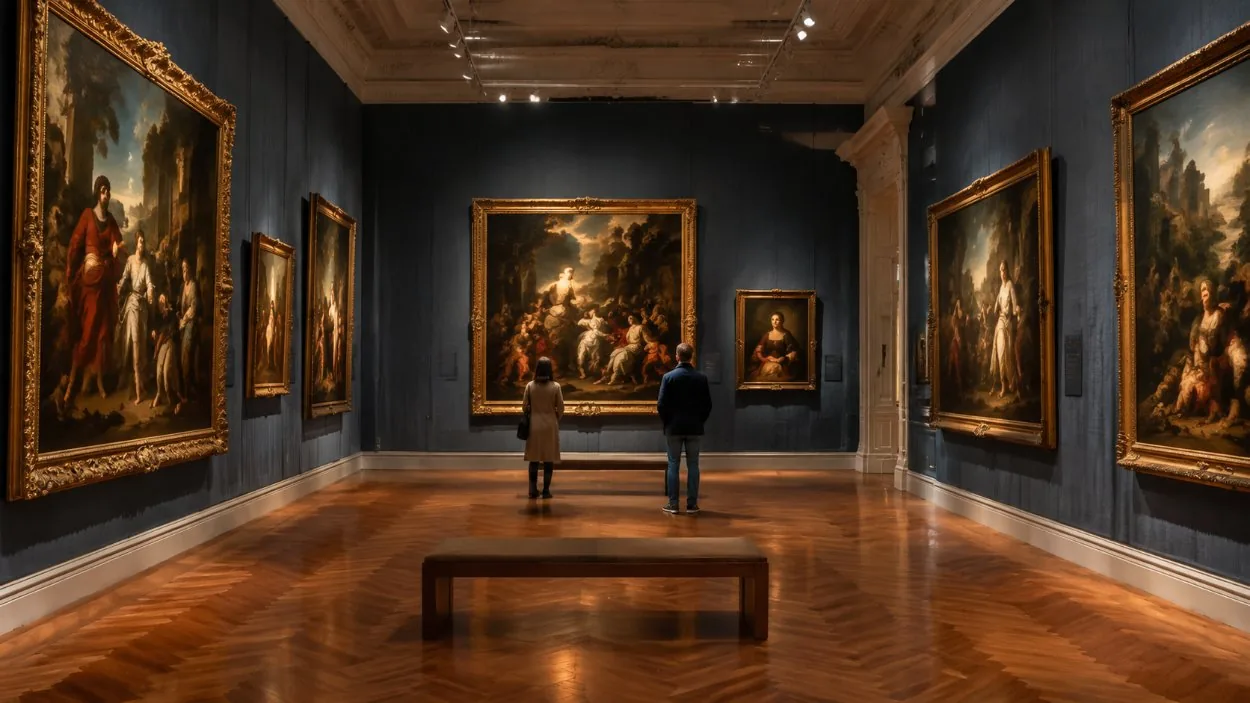
Where the Paintings Come From
The lenders reveal the ambition: the Gallerie dell'Accademia in Venice, the Palazzo Chiericati in Vicenza, the Galleria Sabauda in Turin, the Louvre, the Kunsthistorisches Museum in Vienna, and the Uffizi in Florence. Three curators brought the collection together: Giovanni Carlo Federico Villa from Turin, Neville Rowley from Berlin, and Pierre Curie, the museum’s curator. Tintoretto travels little because his largest works are fixed to the walls of Venice; what comes here is what can come.
The Seven Works I’d Look at First
The Miracle of the Slave (1548), the painting that made his reputation in Venice, with that body falling from the sky amid the crowd. The Miracle of Saint Augustine (1547–1549), in the same vein. The Trinity (c. 1561–1562). The Creation of the Animals (1550–1553), where God glides above the waters and the fish follow him. The Adoration of the Shepherds (c. 1555–1560). Susanna and the Elders (c. 1555–1556), the light on skin and the hedge. And the Self-Portrait (c. 1588), an old man gazing out, to be compared with the portrait of Édouard painted by Nélie in 1872.
What the Exhibition Tells Us
Three themes: large religious decorations, dramatic staging with its foreshortening, diagonals, and theatrical lighting, and Tintoretto’s influence on 19th-century French painting. The last point resonates most in this house: Édouard André collected Delacroix as early as 1860, and Delacroix looked to Venice. I detail the couple and their collection on the history of the Hôtel André.
How It Works
You choose a 15-minute time slot online or at the ticket desk. This sets your entry time into the exhibition rooms, not the length of your visit. The museum’s app offers around twenty audio commentaries in French and English; a physical audioguide is also available on-site. Children aged 7 to 12 receive a free activity booklet. Flash photography is prohibited, as in the rest of the house. Booking isn’t mandatory, but on Saturday afternoons, it helps avoid waiting for a late slot—I explain this on whether to book.
What works
- Loans from Venice, Vienna, Florence, and the Louvre in a human-scale home
- A 15-minute time slot that truly smooths out the crowds
- Around twenty free audio commentaries on the app
- The Italian mansion and museum can be explored freely afterward
Things to know
- The first and last weeks are the busiest
- The ticket with the exhibition costs more than the collections-only ticket
- Buy your ticket at the museum, not on GetYourGuide
- The very large Venetian formats don’t travel — don’t look for the Scuola di San Rocco
First Friday evening slot at 6 p.m. The exhibition is quiet, the mansion is even quieter after 7 p.m., and Le Nelie serves until 10 p.m. The opening hours are on a separate page.
After Tintoretto, the salons at night
The opera evening does not include the exhibition but showcases the ground-floor salons without visitors. The dates are listed below.
Reminder: the above evening event is booked via GetYourGuide, but the museum entry ticket is purchased at the museum ticket office or at the desk at 158.
Frequently asked questions
What exhibition is on at the Musée Jacquemart-André right now ?
« Timeless Tintoretto », from September 11, 2026 to January 24, 2027, around forty works. Before it, Georges de La Tour, then the Borghese Gallery. See the history of the house.
Do you need a special ticket for the exhibition?
Yes, the collections + exhibition ticket, with a 15-minute time slot. The collections-only ticket does not include it. See how much it costs.
How long does the exhibition visit last?
45 minutes to 1 hour, plus 1 hour 30 to 2 hours for the mansion. See how much time to allow.
Is there an audio commentary?
Yes, around twenty commentaries on the museum’s free app, in French and English, and a paid physical audioguide. See audioguide and app.